Three indicted in New York for using AI to impersonate executives and steal about $129 million
IA en un minuto newsroom · Editor: Jon Elgezabal
In 30 seconds
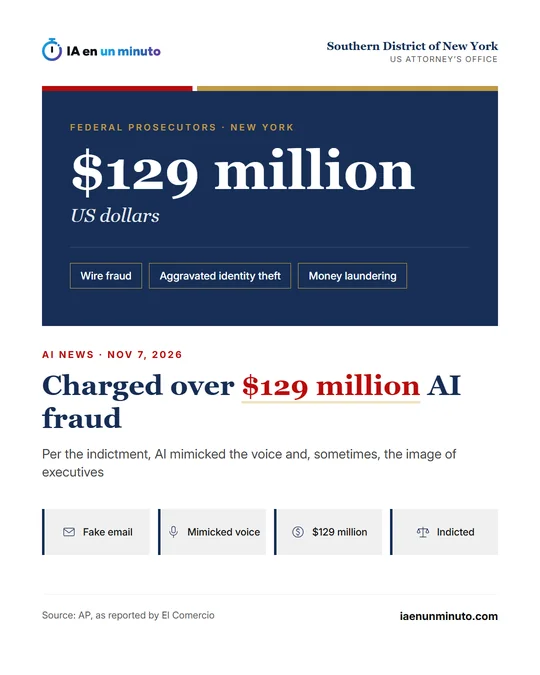
New York has brought three people before a federal judge who, prosecutors say, took about $129 million by posing as company bosses with the help of AI. The scheme chained a fake email to accounting, a call with the executive's voice imitated and a supposed lawyer who ordered the payments. The AP says the arrests took place between June and September and that the money was turned into cryptocurrency.
Three people have been charged in a federal court in New York with using artificial intelligence to pose as company executives and lawyers and walk away with about $129 million. Prosecutors announced the case on Thursday, November 5, according to the Associated Press, whose report was published by the Peruvian daily El Comercio.
Under the indictment, the group spent more than a year and a half going after thousands of companies in several countries. The first step was an email to the accounting team that seemed to come from the chief executive and asked for help with a confidential financial deal. Next came a phone or video call in which AI reproduced the voice and, in some cases, the image of that executive. Finally, the employee was sent on to a supposed lawyer at a large firm, also impersonated, who gave instructions for transfers to bank accounts in several countries. The money was then turned into cryptocurrency to try to hide where it came from.
The victims named in the court papers include hospital systems in Missouri and California, a bank in Rhode Island, a British fintech company, a fund manager in Massachusetts and a pet food company in Florida.
The defendants, from Spain, the United Kingdom, Israel and the United Arab Emirates, were arrested between June and September. They face charges of wire fraud, aggravated identity theft and money laundering. Each count carries up to 20 years in prison, except aggravated identity theft, which has a maximum of two. Lawyers for two of them did not answer the AP, and the US Attorney's Office for the Southern District of New York did not respond to the agency either.
Why it matters · analysis and opinion
This case goes after a weak spot in many companies: trust in a familiar voice or face. Until recently, the fake executive scam could be stopped by asking for a confirmation call; now that very call can be fabricated. Having hospitals and a bank among the victims shows you do not need to be a small or careless company to fall for it. The most useful step is to agree now on a procedure that does not depend on recognizing anyone: any urgent or confidential transfer is confirmed through another channel, on a number the company already has, and signed off by more than one person. The charges still have to be proven at trial, but the method described needs no special means and is easy to copy.
Source: El Comercio · Written with the help of AI: how we make the news