Microsoft and Nvidia unveil the Surface Laptop Ultra, with the RTX Spark chip, and new AI features in Windows 11
IA en un minuto newsroom · Editor: Jon Elgezabal
In 30 seconds
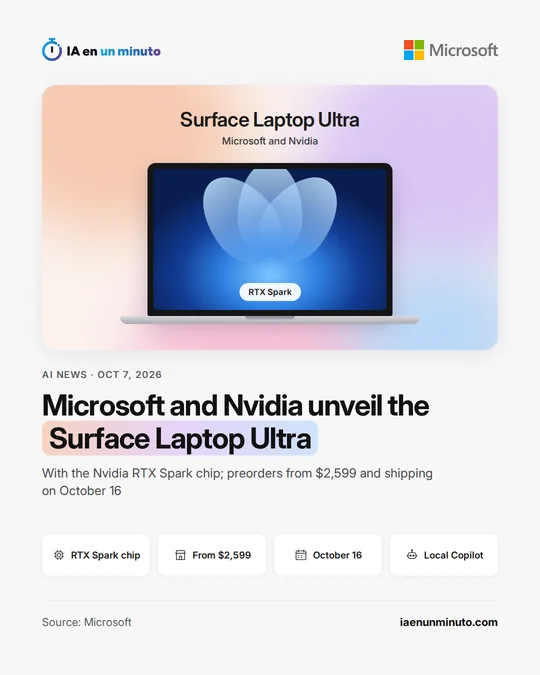
Nvidia is debuting its RTX Spark processor in Microsoft's Surface Laptop Ultra, which takes reservations from $2,599 and reaches stores from October 16. Lenovo, Dell, HP, MSI and Asus are also taking orders for their own laptops with that chip. Microsoft expects that, over the next few months, Copilot on Copilot+ PCs will be able to work with documents and models on the device and do tasks for the user if they allow it.
Microsoft and Nvidia want AI to run inside the laptop, not just in the cloud.
At an event in San Francisco, according to Nvidia, Microsoft and Nvidia launched the Surface Laptop Ultra, a laptop with RTX Spark, the new Nvidia chip designed to run AI models on the device itself. It can be preordered from $2,599 (MSRP) on Microsoft.com and at select retailers worldwide, and will be available starting October 16. Microsoft has also opened preorders for the Surface RTX Spark Dev Box, at $5,999, only on Microsoft.com and in the U.S.
According to Microsoft, RTX Spark PCs from Asus, Dell, HP, Lenovo and MSI can also be preordered starting today and begin shipping October 16. Compact desktops with the chip will go on sale in November, according to Nvidia.
In Windows 11, and with the user's permission, Copilot, the Microsoft AI assistant, will be able to use files on the computer, take actions on the user's behalf and use AI models that run on the device itself. Microsoft expects these features to start rolling out over the next few months on Copilot+ PCs, the Windows computers built for AI. Windows 11 also now lets organizations set which files and networks AI agents can access, through Microsoft Execution Containers, which is generally available starting today.
Why it matters · analysis and opinion
Until now, almost everything an assistant like Copilot did went through remote servers. Microsoft and Nvidia propose splitting the work: whatever can be handled on the laptop stays there, and the cloud comes in when needed. For anyone handling sensitive documents, that could mean less information leaving the device, and for companies, spending less on pay-per-use services. At the same time, an assistant that opens files and acts on the user's behalf makes it important to think carefully about which permissions it gets, which is why it matters that organizations can limit what each agent can reach. Open questions remain: how those local models perform compared with cloud ones, and exactly when the Copilot features will arrive, since Microsoft only gives a timeframe of months.
Official source: Microsoft · Written with the help of AI: how we make the news