Microsoft Teams will support third-party deepfake detection and impersonation warnings in meetings in November
IA en un minuto newsroom · Editor: Jon Elgezabal
In 30 seconds
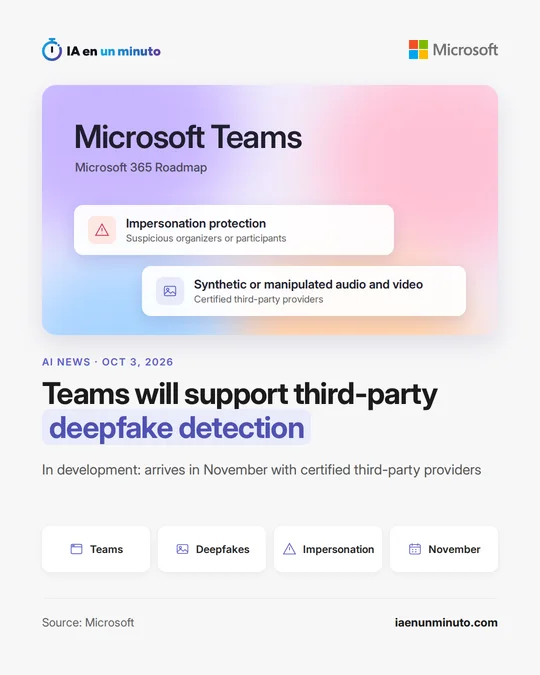
Microsoft is working on two additions meant to make it harder to pose as someone else in a Teams meeting. The first opens the app to deepfake detectors from certified outside vendors, which will examine picture and sound and alert Teams; the second will display alerts when an identity looks suspicious. Both remain in development and are expected to become generally available in November.
Microsoft is preparing two features for Teams (its meetings and chat app) to counter impersonation in meetings: support for deepfake detection tools from other companies and a built-in impersonation protection feature, BleepingComputer reported on Thursday, October 8, citing two new entries on the Microsoft 365 Roadmap.
The first entry says organizations will be able to strengthen meeting security with synthetic audio and video detection solutions from certified third-party providers. Those solutions analyze meeting audio and video for signs of synthetic or manipulated content and send detection signals to Teams, which will surface them and let people act on them inside the meeting. Microsoft specifies that the detection itself is performed by the third-party provider: Teams supplies the platform integration and the experience for displaying those signals. The entry lists it for the desktop app, Mac and the web.
The second one, Impersonation Protection, helps identify potentially deceptive participants and meeting organizers. When Teams detects a potential impersonation attempt, it will show warnings and risk indicators to help people recognize suspicious identities and make more informed decisions when joining or participating in a meeting. This one is also listed for Android and iOS.
Both features are marked as "in development" and will reach general availability in November 2026, after a worldwide rollout. The entries do not say which providers will be certified, and they give no pricing or licensing requirements.
BleepingComputer frames them as part of a broader push to boost security in Teams. In December, Microsoft announced that admins would be able to block external users through the Defender portal starting in January, to thwart cybercrime groups (including ransomware gangs) that abuse Teams in social engineering attacks targeting their victims' employees. In August it began rolling out a policy that lets admins automatically block all identified external bots from joining meetings, and in September it announced that Teams will blur QR codes sent by external senders and that, starting in November, people will be able to report suspicious guest invitations directly from the app.
Why it matters · analysis and opinion
Until now, checking that the person speaking on a video call is who they claim to be sat outside the tool: it depended on each employee's eye. What is new is that Teams opens the door to that signal appearing inside the meeting, with one important caveat: Microsoft does not detect the deepfakes, it only displays what a third-party provider detects, and each organization will have to choose that provider. The providers, the cost and how accurate they are remain unknown. Until it arrives, what protects a company is still procedure: no transfer, change of bank account or handover of passwords based on a request made in a meeting without confirming it through a second, already known channel. And whoever administers Teams can review today which external users and which bots are allowed into its meetings.
Source: BleepingComputer · Written with the help of AI: how we make the news