Apple tightens App Store rules against apps that generate AI nudes
IA en un minuto newsroom · Editor: Jon Elgezabal
In 30 seconds
Apple now requires apps in its store to stop and delete, on their own initiative, intimate images shared without consent, AI-generated ones included. Developers who lack enough protection, or leave the problem unfixed after a warning, can be dropped from the App Store. Apps that hide what they do during review and change once approved may be taken off the store and out of the Apple Developer Program.
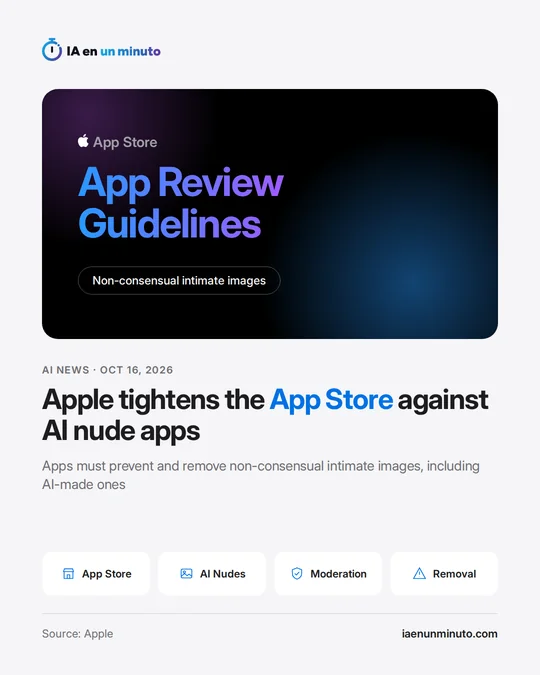
Apple has tightened its App Store rules against intimate images shared without consent, including ones made with AI. The company announced the change on Friday, October 16, on its developer website.
Apple has revised its App Review Guidelines, the set of rules every app in its store has to meet. Guideline 1.2, on content moderation, now names these images explicitly, AI-generated ones included, and apps must stop them from being posted and take them down on their own initiative. Developers who lack sufficient safeguards, or who leave a problem unfixed once they have been warned, may breach Apple's Developer Code of Conduct and lose their place on the App Store.
Apple points out that pornography has been banned from its store for a long time, and that this covers apps that produce sexually explicit images of real people who have not agreed to it. Apps hosting content from their users were already obliged to filter offensive material, offer a way to flag it and let people block accounts that harass others.
The update also brings guideline 2.5.19, which spells out a ban that already existed: apps may not hide what they really do during review and then change once approved, for instance with features missing from the version sent in. Apple cites apps that only reveal their function of undressing people after approval, a tactic known as bait-and-switch. Apps caught doing this can be pulled from the App Store and expelled from the Apple Developer Program.
In the same revision, Apple makes clear that apps facilitating human trafficking or child exploitation will be taken off the App Store and also kept out of other distribution channels. According to the list of changes, translations of the updated guidelines will reach the developer website within a month.
According to Apple, last year it stopped more than 150,000 apps with safety issues from reaching users and shut down more than 193,000 developer accounts for fraud and abuse. The company traces those violations to malicious actors, in some cases organized fraud rings, who hide harmful content that only switches on once the app has been approved.
Why it matters · analysis and opinion
The change puts the responsibility on whoever publishes the app: not producing nudes is no longer enough, they also have to stop users from uploading them and take them down without waiting for a report. The rule reaches social networks, chat apps, forums and AI photo editors that let people share what they create, even if their main purpose is something else. For anyone with an app in the store or an update in the works, the sensible step is to review now the filters applied before posting, check that the report button works and make sure someone handles Apple's notices. The rule against apps that change after approval also points to a less visible risk: features that switch on after review, which can end in removal from the developer program.
Official source: Apple · Written with the help of AI: how we make the news
What does it mean for your business? · analysis and opinion
The change mainly affects small studios and freelance developers in Spain and Latin America who publish apps on the App Store where users upload content, or apps that create or edit images with AI. For a business that simply uses apps on its iPhones, nothing changes day to day.
Anyone with an app of this kind should review it now against the list Apple itself points to: filter objectionable material, give users a way to report offensive content and let them block abusive accounts. If the app generates or retouches photos of people, our advice is to add checks before an image is shown, set up a simple procedure to take content down as soon as a report arrives, and keep a written record of the measures in place. It is also unwise to switch on features after approval that were not shown during review, because that is exactly what the rule prohibits.
The main cost is development and moderation time, which weighs heavily on a small team. The risk of doing nothing is greater: removal of the app from the App Store and even from the Apple Developer Program, which means losing that sales channel. If an external AI service is used to generate images, the prudent step is to check what safeguards it offers before relying on it.