IA en un minutoNewsBusiness and products
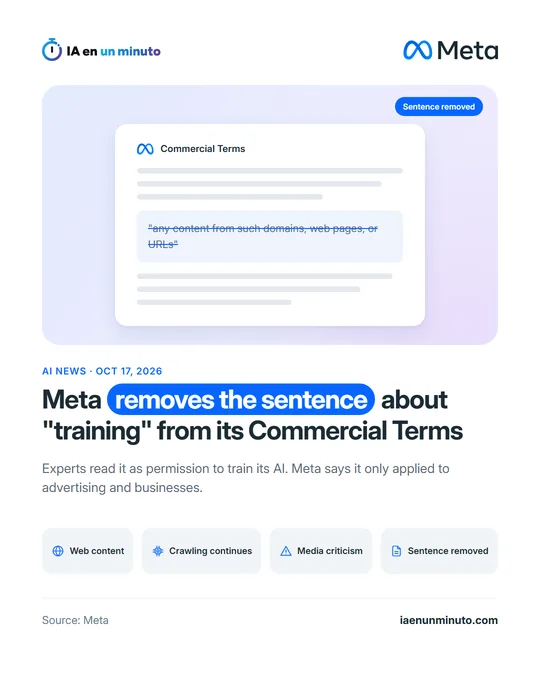
Meta removes from its Commercial Terms the sentence experts said let it train its AI on web content
IA en un minuto newsroom · Editor: Jon Elgezabal
In 30 seconds
Meta has taken the word train out of the permission it keeps to crawl websites linked to its business accounts, which include those of almost every news outlet. Nieman Lab and several experts saw that sentence as a way to use that material for free in its AI, which Meta denies: the company says the crawling only serves advertising and its business services. The change comes before October 30, when the terms take effect.
Meta has taken out of its new Commercial Terms a sentence that, according to several experts, let it train its AI on content from the websites it crawls. The Verge reported the change on Saturday, October 17. Meta maintains that those terms only applied to its advertising and business products.
The sentence said Meta could use "any content from such domains, web pages, or URLs" to "provide, develop, improve, research, train, and maintain the integrity of" its products. According to Nieman Lab, it reached the websites linked to business accounts on Facebook, Instagram or WhatsApp, and almost every news outlet holds at least one. Nieman Lab and James Grimmelmann, a Cornell professor of digital and information law, saw it as an attempt to hand Meta the right to train its AI for free on the content of those sites and to get around the blocking instructions in the robots.txt file, which tells crawlers what they may read.
Meta announced the update in early October. According to Nieman Lab, business accounts had no way to stay out before it applies: the text asks anyone who disagrees to stop using Meta's products for business purposes. At first, Andy Stone, who heads communications at Meta as vice president, and the spokesperson Daniel Roberts rejected that reading and insisted there was "no change" in how Meta uses web crawlers.
After the criticism, Meta has changed the wording. The new version still lets it crawl those websites, including by creating test credentials to get into them, but it no longer talks about training and ties the crawling to its advertising and business products. In a later statement to The Verge, Roberts said this "does not change how Meta uses web crawlers", that "this is not about scraping news sites" and that site owners can still signal their preferences with robots.txt.
The sentence sat in the version of the terms that takes effect on October 30, so it never actually applied.
Why it matters · analysis and opinion
The episode shows where AI access to other people's content is being decided today: in the small print of terms that are accepted in order to advertise or run a page. That a single sentence was enough for legal experts to see a training permission, and that public pressure made it disappear before it applied, says a lot about how fragile that ground is. The removal does not close the door to crawling, which stays in the text, so any company or news outlet with a business account at Meta would do well to read the new version before it applies and to check what its robots.txt allows. It is also worth keeping a copy of what is accepted: this case shows that the text can change between the announcement and the date it takes effect.
Source: The Verge · Written with the help of AI: how we make the news