ChatGPT signs fake New Yorker-style cartoons with the names of real cartoonists
IA en un minuto newsroom · Editor: Jon Elgezabal
In 30 seconds
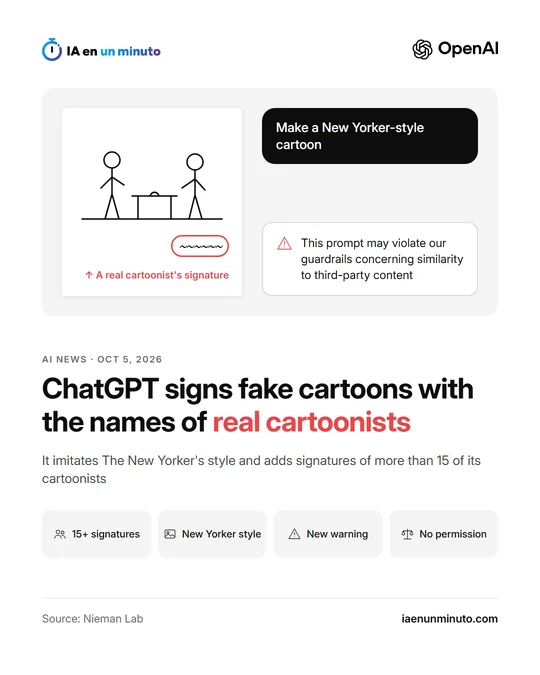
When asked for drawings in The New Yorker's style, ChatGPT sometimes signs them using the names of real cartoonists who never made them. Andrew Deck of Nieman Lab collected more than 15 such signatures, including those of Brendan Loper, Emily Flake and Harry Bliss, used without consent or payment. A warning appeared after OpenAI was told, but the problem persisted when the story ran.
ChatGPT generates cartoons that imitate the style of The New Yorker and, in some of them, adds the signature of real cartoonists from the magazine who did not draw them. Andrew Deck documented it at Nieman Lab, a website that covers journalism.
The most widely seen case is a cartoon of Dolly Parton and Tim Curry that went viral in late August with the signature "BLOPER", the pen name of Brendan Loper. Loper did not draw it: ChatGPT had generated it after a user asked for "a New Yorker-style cartoon". Nieman Lab counted the signatures of more than 15 of the magazine's cartoonists, including Emily Flake, Harry Bliss and Joe Dator, used without permission or compensation.
After Nieman Lab notified OpenAI, ChatGPT began answering those requests with a warning that the prompt may violate its guardrails concerning similarity to third-party content. Even so, when the story was published it was still signing some cartoons with real names. OpenAI says it appreciates the community "flagging bugs and unintended behavior" by its models so it can address them, but it declined to explain how they learned those signatures.
Condé Nast, the publisher of The New Yorker, signed a licensing deal with OpenAI in 2024, but a spokesperson for the magazine says Condé Nast has never given an AI developer permission to train models on its cartoons. "My name is my name," Loper says. "It felt very much like a violation of my personhood."
Why it matters · analysis and opinion
Brendan Loper loses first, and with him other New Yorker cartoonists whose signatures appear on cartoons they did not draw. A signature is not a style: it is a claim of authorship, and putting it on someone else's drawing deceives whoever sees it. OpenAI's fix falls short: the warning only came after Nieman Lab asked, and even then it was still signing some cartoons. There is also the question the company declined to answer: where it learned those signatures, when the publisher says it never authorized training on its cartoons. For anyone who publishes generated images, the consequence is direct: check each one for names or signatures before using it, and do not ask for work in the style of a specific magazine or artist.
Source: Nieman Lab · Written with the help of AI: how we make the news