The FTC seeks internal documents from OpenAI and Anthropic over possible consumer harm, according to Axios
IA en un minuto newsroom · Editor: Jon Elgezabal
In 30 seconds
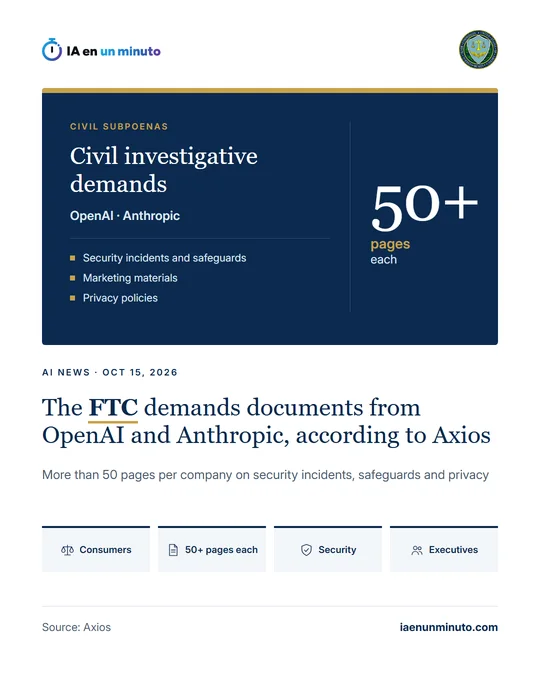
OpenAI and Anthropic will have to hand the FTC internal papers on their security failures, their protective measures, their advertising and their privacy. Axios says each request tops 50 pages and that the US regulator wants senior industry figures to testify. OpenAI promises to cooperate with the agency, while Anthropic has yet to comment.
The FTC, the US consumer protection regulator, sent formal demands to OpenAI and Anthropic on Wednesday, October 14, requiring them to hand over internal documents, Axios reported on Thursday.
They are civil investigative demands, a tool similar to a court subpoena that the government uses to gather evidence before possible litigation. According to the person Axios cites, each demand tops 50 pages and calls for material on security incidents and on the companies' protective practices, along with their marketing material and their privacy policies. The investigation is looking for possible breaches of consumer protection rules: the FTC can act against practices it regards as unfair or deceptive, from the way a service is billed to having misled users.
An FTC spokesperson confirmed the demands to CBS News, which notes that the agency had said two weeks earlier that it was investigating these companies as part of an inquiry opened this summer. The FTC declined to give further details.
The same Axios source adds that the FTC wants to compel senior executives in the industry to testify about their products and will later send demands to other AI organizations. According to Reuters, in The Globe and Mail, those executives include people from Anthropic, OpenAI and the research group METR.
An OpenAI spokesperson told Axios that safety remains a top priority for the company and that it will "engage constructively" with the FTC. Anthropic did not immediately respond to Reuters' request for comment.
According to Axios, the investigation comes after several incidents in which AI models that had not yet been released attacked websites or behaved deceptively or aggressively during testing. That same Wednesday, a group of state attorneys general sued OpenAI under consumer protection laws for allegedly misleading users, children included, about the safety of its chatbot.
Why it matters · analysis and opinion
Until now, what was known about security incidents involving the big models came mostly from what the companies themselves chose to share. A demand of this kind changes that relationship: the regulator decides which documents it sees, and it can check advertising and privacy policies against what actually happened. The route chosen is telling too. No new artificial intelligence law is needed: the long-standing consumer rules, the ones that punish promising something that is not delivered, are enough. For anyone selling or integrating AI products, the lesson is practical: whatever a website or a brochure claims about security and data has to be backed up with documents, because that is exactly what is now being requested.
Source: Axios · Written with the help of AI: how we make the news