Meta expands its AI that detects teens on Instagram worldwide to apply more protections
IA en un minuto newsroom · Editor: Jon Elgezabal
In 30 seconds
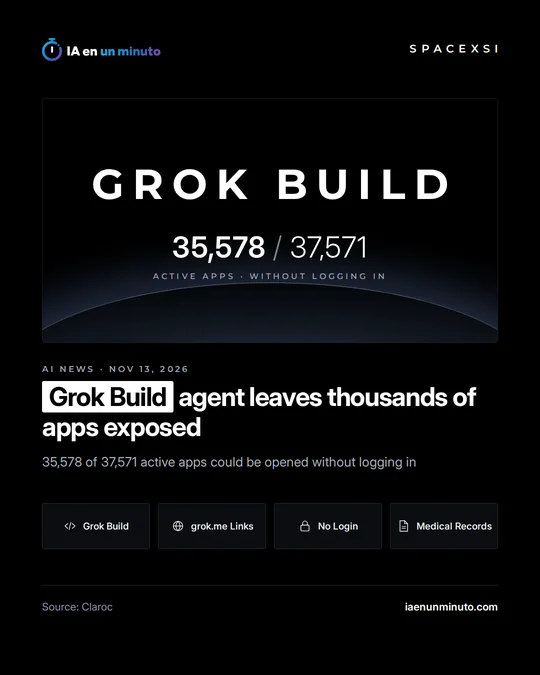
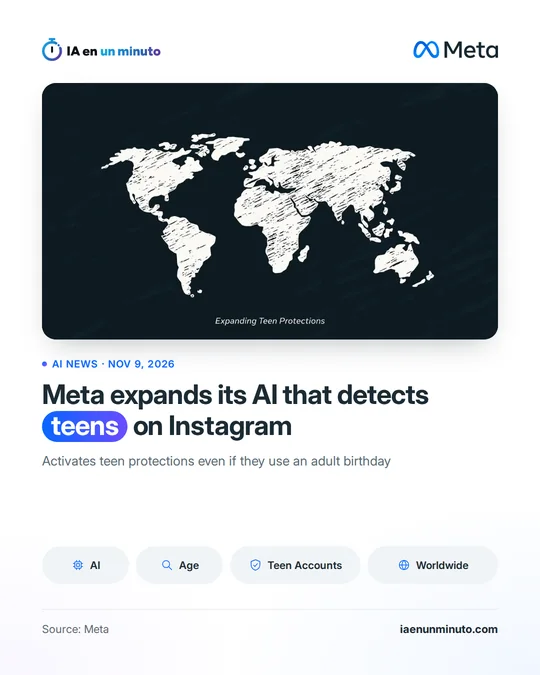
Instagram will now place in Teen Accounts, in any country, the users that Meta identifies with AI as teenagers, even if they signed up with an adult age. Meta had already said in May that the European Union and Brazil would get it, and now extends it under its deal with 52 US attorneys general. Facebook is still getting the system, and Threads will start receiving a similar one before the year is out.
Meta no longer trusts only the date of birth a teenager types in when signing up for an account.
On Monday it extended to every country, on Instagram, the AI technology it uses to look for users it suspects are teenagers, even if they registered with an adult's date of birth, so it can switch them to Teen Accounts, the accounts with built-in protections for 13- to 17-year-olds. Those accounts restrict who can get in touch with them, what content they see and how long they spend in the app. Meta gives no figures on how many accounts it has switched so far: it says the results are encouraging and that, with the expansion, millions more teenagers will get these protections.
In May it had already announced it was bringing the system to the European Union and Brazil, according to MLex. Teen Accounts also exist on Facebook and Messenger. On Facebook, the AI detection is still being rolled out, and on Threads, another of its apps, Meta will start launching a similar technology later this year.
The expansion is part of the commitments in its recent agreement with 52 attorneys general from both major parties, who represent the District of Columbia and American states and territories. Within that framework, the company says it is investing to better detect accounts likely to be held by children under 13, who are not allowed on its apps, and those of 13- to 17-year-olds.
This month, parents in the US will start seeing a video on Instagram that explains its approach. The video links to an article by Larry Magid, president and CEO of the online safety organization ConnectSafely, which parents in any country can read.
In Australia, Meta also uses Apple's age-range signal: when setting up a child's phone, parents can ask the app store to confirm their age, and Apple then passes that range to each app the teen downloads. Meta has long called for a law requiring age verification and parental consent at the app store, rather than each platform checking age on its own.
Meta is asking TikTok and YouTube to adopt the same practices.
Why it matters · analysis and opinion
Until now, a person's age on a social network was whatever they said it was; with this step, it becomes whatever the platform estimates. It is one more layer of protection for families, but it does not replace supervision at home, and questions remain: the announcement does not explain how accurate the system is or how an adult mistaken for a minor gets their regular account back. The move also has a political reading. Meta wants to set the industry standard before laws do, which is why it asks for app stores to verify age and presses TikTok and YouTube to do the same. Parents would do well to check which date of birth appears on their children's accounts and to read the ConnectSafely article that Meta links to.
Official source: Meta · Written with the help of AI: how we make the news