A Podqi study finds fake or risky stores in up to 15% of chatbot shopping answers
IA en un minuto newsroom · Editor: Jon Elgezabal
In 30 seconds
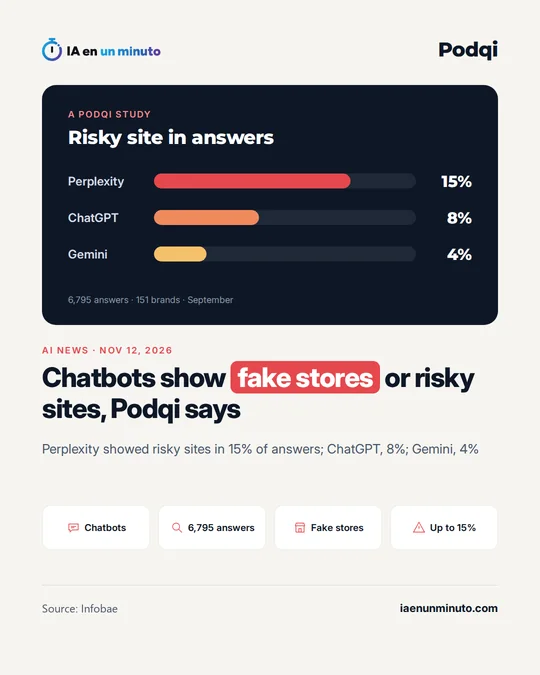
Perplexity, ChatGPT and Gemini pointed people to fake or risky shops when asked where to buy a brand, according to Podqi. The worst was Perplexity, at 15% over 6,795 answers and 151 brands, while ChatGPT scored 8% and Gemini 4%. Small brands and regional stores fared worst, and the questions were drafted by Podqi itself, which makes a living protecting brands.
A study by Podqi, a company devoted to protecting brands' intellectual property, concludes that a chatbot can send someone asking where to buy a brand to a fake or risky store. The Verge published it as an exclusive, and Infobae covered it on Thursday, November 12.
Podqi ran the tests in two rounds during September. It asked ChatGPT, Perplexity and Gemini about 151 brands, among them Le Creuset, Stüssy, Birkenstock, Madhappy and Lululemon, with queries on which websites are best for buying them or whether they have regional stores, and it analyzed 6,795 answers. A risky site meant a website that imitates a real store or sells copies, an old brand domain that someone else has registered again, or an abandoned page that anyone could buy. The study counted it the same whether the chatbot recommended the site, simply listed it or warned about the danger.
Perplexity showed one of those sites in 15% of answers, ChatGPT in 8% and Gemini in 4%. ChatGPT warned the most often: it did so in 24% of the times it showed one. In one case cited by the study, Perplexity presented a wrong page as Stüssy's official website.
The failures piled up with small brands and with questions about regional stores, where the chatbots even listed local pages for brands that have none. The study has limits: Podqi wrote the questions, which do not come from real conversations, and the company has a commercial interest in the topic, since Madhappy, one of the brands analyzed, is one of its clients.
Trevor West, Podqi's chief executive, recommends checking the source before handing over personal or card details, even when the answer comes from a chatbot. In the responses gathered by Infobae, Google pointed out that Gemini shows links to its sources so they can be checked; OpenAI said it keeps improving its protections; and Perplexity described itself as consistently the most accurate AI in research tests, without explaining the Stüssy case.
This is not the first test of its kind: in July, Searchable asked the three chatbots more than 72,000 questions about UK retailers, and roughly one in 15 answers with web addresses led to a dead link, a copy or a different business.
Why it matters · analysis and opinion
Chatbots are starting to take the search engine's place right when people choose where to buy, and this study points to a specific risk: a confident answer can lead to a website that imitates the official store. It should be read with caution, because it comes from a company that sells brand protection and the questions are not from real users, but it is in line with earlier tests by other firms. For shoppers, the precaution is the usual one: reach the store by typing a known address or through the brand's own website, especially with small brands or stores in other countries. For brands, the lesson is to watch over their old domains and the copies, which now also arrive through this route.
Source: Infobae · Written with the help of AI: how we make the news