IA en un minutoNewsBusiness and products
Anthropic's seven cofounders will sell $1.75 billion in shares in the company's IPO
IA en un minuto newsroom · Editor: Jon Elgezabal
In 30 seconds
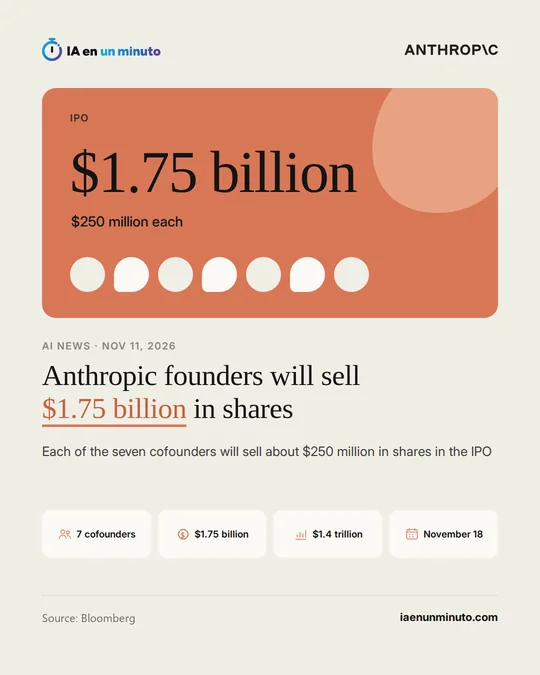
Dario and Daniela Amodei, Jack Clark, Christopher Olah and the other three Anthropic cofounders will sell about $250 million each, $1.75 billion in total, during the stock market debut. For each of them it is only around 1.5% of their stake. The company is seeking as much as $90.4 billion at a value of roughly $1.4 trillion, and the price is due on November 18.
Between them, Anthropic's seven cofounders will put about $1.75 billion worth of shares up for sale when the company makes its stock market debut next week. The figure comes from the updated version of the offering prospectus, filed on Tuesday, November 10, and was published by Bloomberg.
Each of them accounts for roughly $250 million, an amount calculated using the midpoint of the price range. For each cofounder, that sale represents only around 1.5% of what they own in the company. Besides Dario and Daniela Amodei, the group is made up of Tom Brown, Jack Clark, Jared Kaplan, Sam McCandlish and Christopher Olah. At that valuation, the Bloomberg Billionaires Index estimates each of them will be worth close to $18 billion.
According to Dataconomy, citing the prospectus, Anthropic will keep none of the money raised by the shareholders selling in the offering. Each cofounder has also committed to donate 80% of the Anthropic stock they hold to charitable causes, although the prospectus notes that these pledges can be withdrawn and are not legally binding.
It is not the first time they have cashed in. According to the prospectus, the Amodei siblings already sold shares in tender offers held in June 2025 and April 2026. Last year, each of them received a cash salary of roughly $650,000, and nearly all of their wealth is still in Anthropic stock.
Through the public offering and a private placement, Anthropic hopes to raise up to $90.4 billion, at a valuation of roughly $1.4 trillion. Under the terms reviewed by Bloomberg, the price would be set on November 18 and the shares would begin trading the next day.
Founders selling during the IPO itself can be read as a bad sign, but Jay R. Ritter, professor emeritus at the University of Florida who researches these deals, does not think it will scare buyers away. As he explained to Bloomberg, investors are already used to founders and large shareholders taking some of their profits. As an example he pointed to Google's 2004 debut, when Larry Page and Sergey Brin each sold about $41 million in shares.
Why it matters · analysis and opinion
Selling in the middle of an IPO tends to raise suspicion: if the people who know a company best are getting rid of shares, buyers wonder why. In this case the sale is small compared with what they keep, and it comes after years with almost all of their wealth tied to a single company and modest salaries. What the deal does show is that the paper wealth built up at the big AI companies is starting to turn into hard cash, a clear sign that the sector is entering its harvest stage. For anyone following the debut, what matters will not be this sale but the final price and how the stock behaves in its first sessions, which will show how much confidence there really is.
Source: Bloomberg Línea · Written with the help of AI: how we make the news