IA en un minutoNewsBusiness and products
Meta reconsiders its 2030 net-zero emissions goal amid the AI boom
IA en un minuto newsroom · Editor: Jon Elgezabal
In 30 seconds
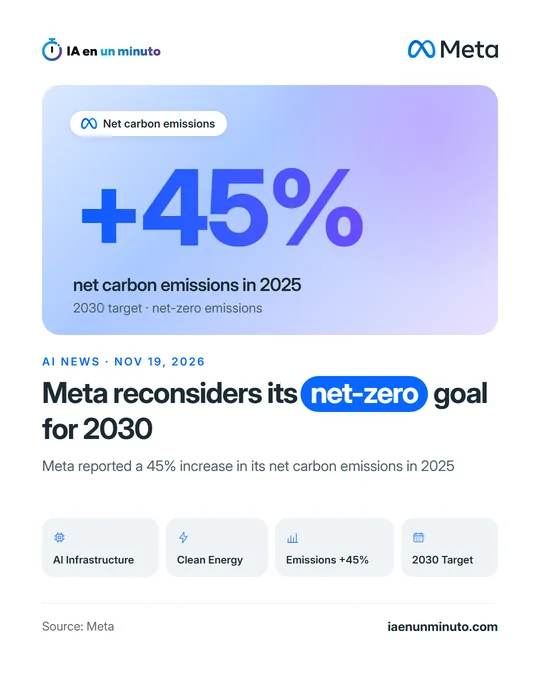
Meta has put its 2030 net-zero target and the milestones leading up to it under review, and will share the result later. Its annual report says the AI boom requires data centers at a pace clean energy cannot match. Its net emissions for 2025 reached 11.8 million tons of CO2e, up 45%.
Meta is reviewing its goal of reaching net-zero emissions in 2030, at a time when demand for artificial intelligence infrastructure keeps growing.
The owner of Facebook, Instagram and WhatsApp sets this out in its 2026 Sustainability Report, which it presented on November 19 on its sustainability site. According to the document, the company is re-examining the timing, order and intermediate milestones on its way to net zero, including the 2030 date for that goal and its near-term intensity targets, and will say later where that review ends up. Meta adds that its long-term ambitions remain the same, but that the environment it works in has changed.
Its explanation is that the need for AI infrastructure has risen more quickly than nearly anybody predicted, while clean power and other ways of cutting carbon have been rolled out at a slower pace. The report points to years-long waits to connect to the power grid, permits that have not become quicker, transmission lines lagging behind demand, and still-immature supply chains for the fuels, materials and hardware needed to decarbonize.
In 2025, its net emissions came to 11.8 million metric tons of CO2e (carbon dioxide equivalent), 45% more than the year before. Meta attributes the rise mainly to two categories in its value chain: the goods and services it buys and capital goods, which account for 22% and 73% of its net footprint, respectively.
In the same report, the company says that for the sixth year in a row it has matched all of the electricity it uses each year, 100%, with renewable and clean sources, with more than 10 GW of capacity contracted in 2025 and more than 30 GW in total. Outlets such as Portafolio have covered the change.
Why it matters · analysis and opinion
A large tech company admitting in writing that its climate goal no longer fits its pace of construction changes the tone of the debate: the energy cost of AI stops being an outside estimate and shows up in the company's own report. The problem is not the electricity it buys, which it already matches with renewable energy, but everything that building data centers so quickly demands: equipment, materials and construction, which is where its footprint is concentrated. For anyone buying AI services in the cloud, this suggests the footprint of those services will come under growing scrutiny, and it makes sense to ask providers for emissions data across their whole chain, not just their power use. It remains to be seen what new timeline Meta will announce.
Official source: Meta · Written with the help of AI: how we make the news