OpenAI unveils GPT-6.1 Sol at one-fifth of the price
IA en un minuto newsroom · Editor: Jon Elgezabal
In 30 seconds
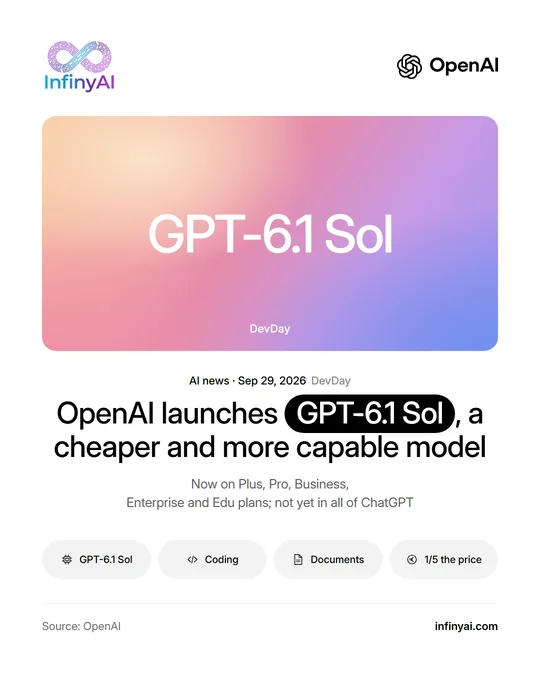
At its DevDay, OpenAI rolled out GPT-6.1 Sol only seven days after GPT-6 Sol, the model that came before it. The company says it performs almost like GPT-6 Astra at coding with agents, operating a computer and professional tasks, but with standard prices five times lower. Those on the Edu, Enterprise, Business, Pro and Plus plans already have it in Codex and in part of ChatGPT, though not yet everywhere.
On September 29, at its DevDay event, OpenAI unveiled GPT-6.1 Sol, its new model, just one week after launching its predecessor, GPT-6 Sol.
According to the company, the new model comes close to the level of GPT-6 Astra, another OpenAI model, in agentic coding, computer use and professional work, at one-fifth of the standard input and output prices.
Since September 29, customers on the Plus, Pro, Business, Enterprise and Edu plans can use it in Codex, the OpenAI coding tool, and in part of ChatGPT, although the company points out that it is not yet available in every area of the product.
In the API, the model is called gpt-6.1-sol and costs $2 per million input tokens, $10 per million output tokens and $0.10 per million cached input tokens, compared with $10, $50 and $1 for GPT-6 Astra. According to OpenAI, that cached input is 50% cheaper than GPT-6 Sol's.
In ChatGPT it is available in ChatGPT Work and Codex, but not yet in Chat. OpenAI adds that in the coming days it will offer GPT-6.1 Sol Ultrafast, which in Codex will generate text up to 8x faster than the model's standard speed. The company also acknowledges that GPT-6 Astra still has the highest score on its scientific research test and says it should be used for the most difficult tasks in that field.
Why it matters · analysis and opinion
Getting results close to Astra used to mean paying Astra prices. With GPT-6.1 Sol, teams building coding agents or document automations can try an almost equally capable model for much less, and for even less when they reuse the same context across many requests. The comparisons come from OpenAI, so before switching it is worth rerunning your own tasks on both models and measuring results and the bill. For ChatGPT users the change is smaller: the model is in Work and Codex, not in regular chat. And with new versions arriving so close together, tying yourself to one specific model makes less and less sense.
Official source: OpenAI · Written with the help of AI: how we make the news