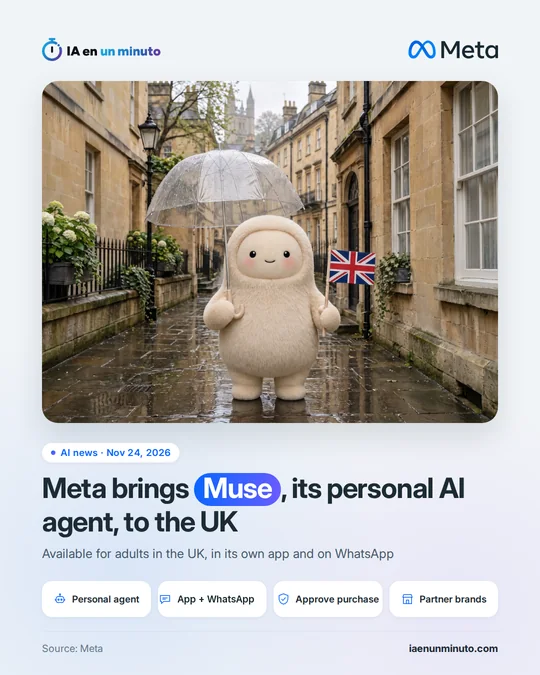
Meta Brings Muse, Its Personal AI Agent, to the UK
IA en un minuto newsroom · Editor: Jon Elgezabal
In 30 seconds
Meta is opening Muse to adults in the UK: an agent that goes beyond answering and runs errands on its own, from chasing a refund to sorting out school dates. WhatsApp and a dedicated app are the two ways in, and underneath sits Muse Spark, from Meta Superintelligence Labs. Muse checks with the user before paying or emailing anyone, and never gets to see their passwords.
Meta now has its personal AI agent in the UK.
As of November 24, anyone in the UK who is 18 or older can use Muse, Meta's personal AI agent, which takes care of jobs such as claiming a refund, hunting for a cheaper energy tariff or organizing the school calendar. People reach it through its own iOS and Android app or straight from WhatsApp, and it runs on Muse Spark, the first model from Meta Superintelligence Labs, designed so an agent can do actual work. Most uses cost nothing, there are subscription plans for heavier users, and Meta plans to bring it to its AI glasses in the coming months. The company had already launched it in Singapore.
Every user picks which apps it can reach, such as email or the calendar, and how much access each one gets. Muse waits for the user's approval before anything significant, like emailing someone or buying something, and it never sees passwords or card numbers: at checkout it can rely on Link, from Stripe, or on Shop Pay, from Shopify, in stores that support it. It arrives with dozens of partners, Spotify and OpenTable among them, plus British names such as Marks & Spencer, Trainline and easyJet. PayPal is set to join soon.
According to Meta, conversations with Muse, along with the data in the cloud-based virtual computer each user is assigned, stay out of its advertising systems. Each person also chooses whether their interactions are used for training, a setting that can be turned off.
Why it matters · analysis and opinion
Where a chatbot stops at answering, Muse is built to act, and it does so from WhatsApp, an app most people already carry on their phones. That lowers the barrier to entry a lot compared with agents that require learning a new tool. The other bet is on partners: the more British shops and services let the agent move around their websites or use the customer's account, the more useful it becomes. What remains to be seen is how it handles long, sensitive jobs, such as a complaint or an expensive purchase, and how much of the useful part fits within free use. For a business selling in the UK, now is a good time to check whether an agent can get around its website without stumbling.
Official source: Meta · Written with the help of AI: how we make the news