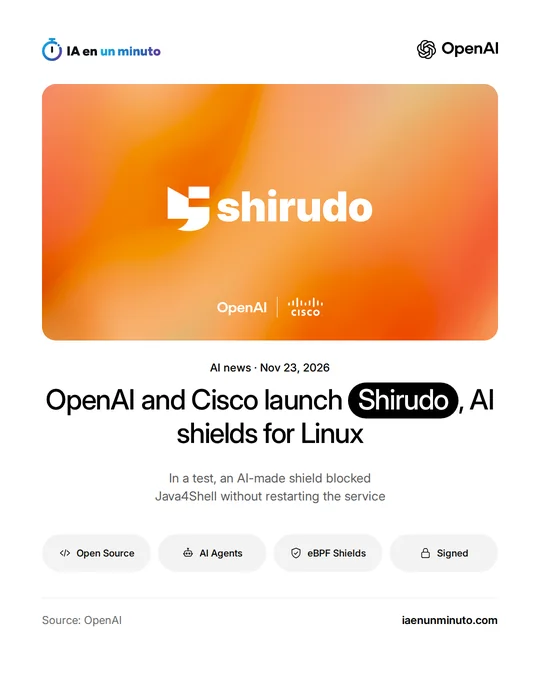
OpenAI and Cisco launch Shirudo, an open-source project to protect Linux systems with AI-generated shields
IA en un minuto newsroom · Editor: Jon Elgezabal
In 30 seconds
Shirudo is the answer from OpenAI and Cisco to the gap between finding a flaw and fixing it: provisional protections for Linux that load without stopping the service. Codex, from OpenAI, generated a shield that halted an attempt to abuse Java4Shell in a test. Each shield is signed and needs an operator's approval before going live.
OpenAI and Cisco have unveiled Shirudo (Japanese for "shield"), an open-source project that helps keep Linux systems protected while they stay up, during the time it takes to prepare and roll out the patch, with no reboot required.
Getting a patch tested and deployed can take days or even weeks, and simply cutting off the Linux operation an attack relies on can bring the service down, since legitimate requests sometimes depend on that very operation. Shirudo relies on eBPF, a Linux technology that runs small programs at specific spots in the operating system, to put shields in place: temporary safeguards that are tested to confirm they stop the behavior exposing a vulnerability while normal requests still get through. A shield is switched on once an operator signs off on it.
In one test, a shield produced with Codex, OpenAI's programming tool, added an input check to Java's Base64 decoder and stopped an attempt to exploit the Java4Shell vulnerability against a live Elasticsearch service, with no reboot.
The two companies are building Shirudo so that AI agents look into vulnerabilities and draft shields, while the decision on what gets deployed stays with security teams. Every shield carries a cryptographic signature that is checked before it loads, and a TPM chip keeps a verifiable log of protections as they are added or removed. The code is released under the 2-clause BSD license, and OpenAI hopes tested shields will ship together with vulnerability advisories.
Cisco has scheduled a technical webinar on the project for December 15, according to its press release.
Why it matters · analysis and opinion
The bottleneck in security is no longer just finding flaws but the time it takes for the fix to reach every machine, and that is where Shirudo is aimed. Being open source and coming from an AI company together with a networking one gives it a chance to become a shared building block, especially if shields start being published next to vulnerability advisories. The challenge is trust: a badly built shield can cut off legitimate traffic, which is why the project leaves the final say to people and requires signatures. For a company running its own Linux servers, for now this is something to try in an isolated environment and follow closely, not to put into production.
Official source: OpenAI · Written with the help of AI: how we make the news