South Korea's president says there are signs AI was used in some recent attacks on the country's banks
IA en un minuto newsroom · Editor: Jon Elgezabal
In 30 seconds
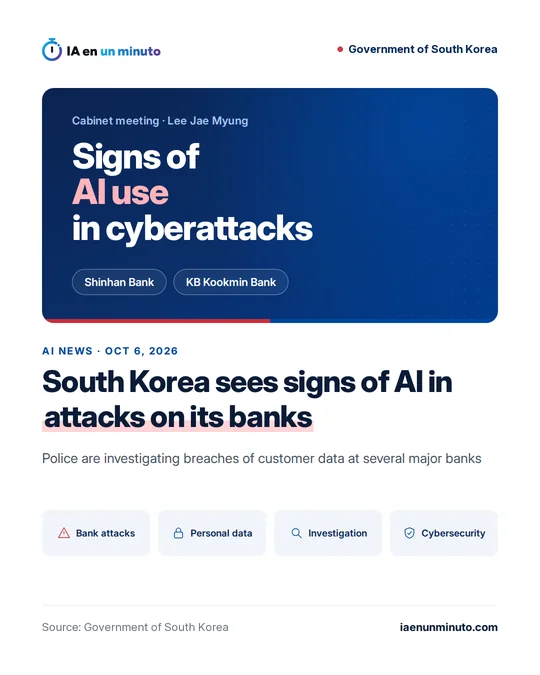
Lee Jae Myung told his cabinet that AI appears to be behind some of the hacks hitting South Korean banks, and he wants defences designed for this new stage. Police are looking into breaches that left information on customers of lenders such as Shinhan Bank, KB Kookmin Bank, Hana Bank and Woori Bank exposed. It is still unknown which tools were involved and how much data was affected.
South Korean President Lee Jae Myung says there are signs that AI was used in some recent attacks on the country's banks.
He said so on Tuesday, October 6, during a cabinet meeting: "In some hacking incidents, signs have emerged of AI being used". He called for the development of cybersecurity methods suited to the AI era. According to the Yonhap news agency, police have opened a full-scale investigation into the attacks, which exposed customers' personal information.
The Financial Services Commission said on Friday that Shinhan Bank, KB Kookmin Bank and others had reported cyberattacks, and Yonhap adds Hana Bank and Woori Bank. On Sunday, the commission's chairman, Lee Eog-weon, convened an emergency meeting with industry associations, regulators and executives from the affected institutions.
Authorities have not detailed what AI tools were used or the full scale of the breaches. The financial watchdog has shared data on 28 IP addresses linked to the attacks with the sector.
Why it matters · analysis and opinion
Hearing it from the president himself changes the tone: this is no longer a lab warning but an official suspicion about real attacks on banks. The key piece is missing, what AI actually did in those attacks, whether writing more convincing scams, finding flaws or automating attempts, and until that is known it is better not to jump to conclusions. What can be done now does not depend on that detail. Companies that hold customer data should check who has access to what, require two-step verification and follow their sector's alerts, as supervisors are doing here by sharing the suspicious addresses. And customers of those banks would do well to distrust any message asking for data or payments, however convincing it looks.
Source: Reuters · Written with the help of AI: how we make the news