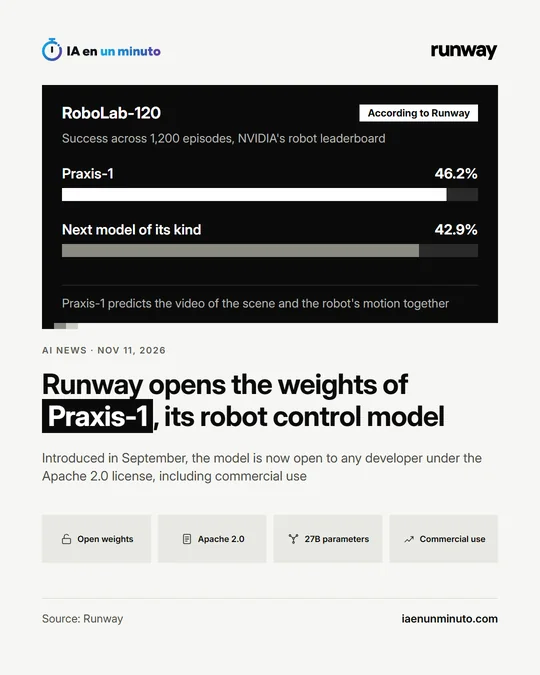
Anthropic tests Claude on electronics design: three prototypes that work
IA en un minuto newsroom · Editor: Jon Elgezabal
In 30 seconds
Diode Computers and Anthropic asked Claude Fable 5.2 for three complete devices, from the specifications and the board to the case and the firmware. Diode assembled the prototypes with the model's instructions and they worked without changes to their circuits. Fable 5 stayed at 25% on PCB Gym, the internal benchmark Anthropic asked Diode to run, while Fable 5.2 reaches 69%.
Anthropic has published research in which it set Claude Fable 5.2, one of its AI models, to design complete electronic devices. It did so with Diode Computers, a company that designs and builds circuit boards and with which it had already worked a little over a year ago, when the models of the time could not yet lay out a board reliably.
The brief was three devices: a hands-free speaker that connects over USB, a voice assistant hub and a pocket-sized virtual pet. Starting from a short request, Claude drew up the specifications, chose where each component would sit on the board, traced the copper tracks linking them, designed a case to be 3D printed, programmed the firmware and prepared the parts list.
Claude was not hooked up to measuring equipment or to the machines that build and assemble boards, so Diode's engineers put together and tested the prototypes following its directions. All three worked without touching the circuits and, according to Anthropic, are still running after weeks of use. Diode made the boards straight from Claude's design files, without the usual rounds of adjustments.
PCB Gym, an internal benchmark that Anthropic asked Diode to run to measure the progress, rates how models arrange components and rebuild the connections on boards whose layout has been stripped out. Fable 5.2 got 69%, against 25% for Fable 5, an earlier model. On BenchCAD 2.1, a public test of whether a model can reconstruct 3D parts, assemblies and boards from drawings and images, it reached 83.5%, almost double Fable 5.1.
Anthropic points out that they are still prototypes: they have not been through certification, thermal testing, antenna tuning or electrical validation, they were not designed for mass manufacturing, and it is not yet known how they will hold up under continued use or whether they would obtain commercial certification. The company also notes that OpenAI recently described how it used its models to create a handheld device.
Why it matters · analysis and opinion
Designing a circuit board means balancing geometry, part availability and factory limits all at once, and until recently AI models got stuck right there. Claude reviewing its own work and delivering files ready for manufacturing brings electronics design closer to small teams that do not have an engineer for each stage. But the jump from prototype to product is the expensive part: validation, certification and durability testing, exactly what this experiment leaves out. On top of that, someone had to assemble and test the devices by hand. For a hardware company, the useful short-term move is to use these models as support for early versions and tedious tasks such as routing traces, with an engineer reviewing every decision before volume production.
Official source: Anthropic · Written with the help of AI: how we make the news