OpenAI launches ChatGPT Wallet so its AI agents can make purchases with Amex, Mastercard and Visa, for now only in the US
IA en un minuto newsroom · Editor: Jon Elgezabal
In 30 seconds
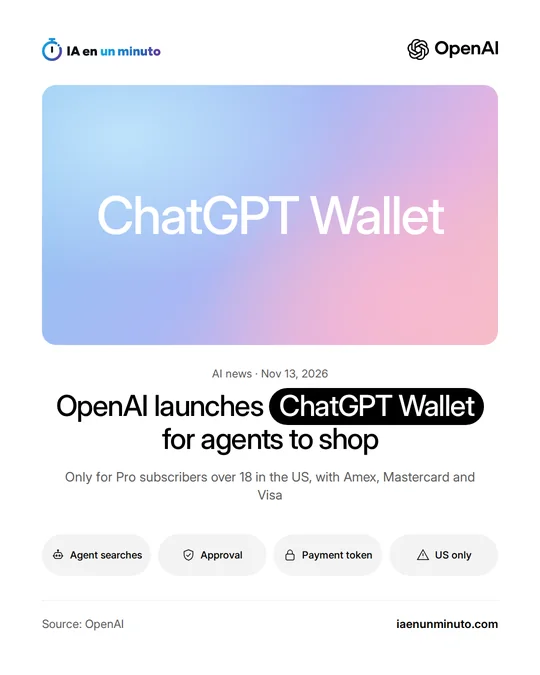
ChatGPT Wallet lets OpenAI's dots pay for purchases on behalf of the people using them, with American Express, Mastercard or Visa cards. Every payment needs the user's approval through Face ID or Touch ID, and the agent only receives a token valid for that one transaction. Wallet is limited to Pro subscribers in the United States aged 18 or over, and OpenAI is taking no cut for now.
OpenAI unveiled ChatGPT Wallet on Friday, a payment wallet that allows "dots", its personal AI agents, to buy things for the user. For now only ChatGPT Pro subscribers can use it, and they must be 18 or older, live in the United States and pay with a card issued there.
According to CNBC, the company developed the feature together with American Express, Mastercard and Visa, and whoever pays keeps the rewards and protections of their card. OpenAI's help page also accepts Chase cards; virtual cards, on the other hand, cannot be used at launch.
The card is saved just once, in a secure form kept outside the conversation. After that, the user simply asks the agent to find, say, a jumper or a hotel, and every purchase is approved with a biometric check such as Face ID or Touch ID. Approval creates a payment token: a card number, a code and an expiry date that replace the real ones and only work for that one transaction, so neither the shop nor the agent ever sees the card details. Wallet works in conversations with a dot; it cannot be used in Chat, in Work or in separate Codex threads.
OpenAI is not charging a commission on these purchases for the moment, CNBC reports, adding that they could later become a new source of revenue. The company introduced dots at its developer event at the end of September. It quickly dropped its first move into shopping, the "Instant Checkout" feature from last autumn, and in March it overhauled its shopping experience for searching and comparing products.
OpenAI admits that commerce through agents is living its "early days" and that Wallet will not always manage to finish the payment in every shop. Some shut the door on them: United Airlines announced on Wednesday that it will block agents trying to book tickets on its systems, and Amazon does not let them buy on its platform. Alongside the announcement, OpenAI has published guidance so that shops do not block its agents by accident.
Why it matters · analysis and opinion
Until now AI assistants helped people decide what to buy, but the last step, paying, stayed in human hands. With Wallet, OpenAI moves into that final stretch by leaning on the card networks, which bring what a chatbot lacks on its own: the trust of banks and merchants. The design, with explicit approval of each purchase and the card details hidden from the agent, tries to answer the most obvious fear, that a program spends money on its own. The obstacle sits on the other side of the counter: as long as airlines and big retailers keep shutting agents out, their usefulness will be limited to the shops that accept them. For anyone selling online, it is a good moment to check whether their website lets these agents through or blocks them without knowing it.
Official source: OpenAI · Written with the help of AI: how we make the news